Jul 19, 2026



Topic: Updates
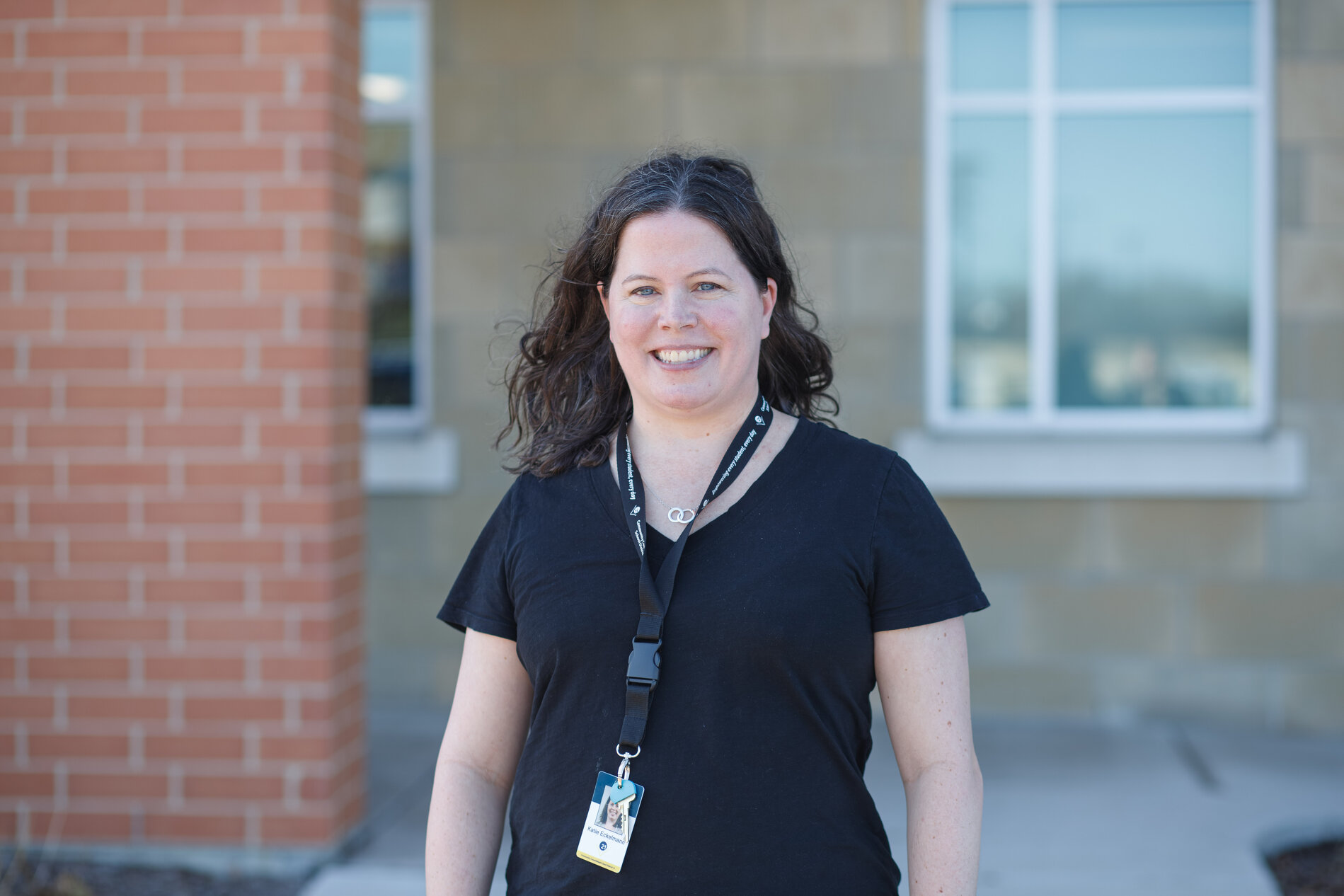
Katie Eckelmann, literacy instructional specialist for Kilmer, Longfellow and Poe Elementary Schools, has been named to the board of The Reading League Illinois, a state chapter of The Reading League dedicated to advancing evidence-aligned reading instruction. In her new role, she will help connect research to classroom practice through statewide outreach, webinars and conferences for educators.
Katie Eckelmann, literacy instructional specialist for Kilmer, Longfellow and Poe Elementary Schools, has been named to the board of The Reading League Illinois, a state chapter of The Reading League dedicated to advancing evidence-aligned literacy instruction.
The national nonprofit organization promotes awareness, understanding and use of evidence-based reading instruction. State chapters, including Illinois, host conferences, webinars and other professional learning opportunities designed to connect research to classroom practice.
“I have always been interested in how kids learn to read and write,” Eckelmann said. “As I taught in Chicago and then San Antonio and then moving back here, I really started to dive into the research and how brains learn how to read and found myself completely fascinated.”
Her interest deepened while serving in a district-level role in Texas, where she saw what she described as a gap between research and day-to-day classroom practice.
“There’s such a gulf between research and what makes it to classroom teachers,” she said. “Teachers are swamped and have so many things on their minds. The mission of this organization is to bridge that gap and, in a manageable way, bring the latest research to teachers and practitioners who are in the classroom.”
Eckelmann first learned about The Reading League about seven years ago while teaching fourth grade in San Antonio and attending a conference the organization sponsored shortly before the COVID-19 pandemic. She later joined the Texas chapter and, after returning to Illinois two years ago, became an active member of the Illinois chapter, participating in monthly webinars and discussions.
When the organization issued a call for new board members – expanding the leadership structure from eight to 13 members – she applied.
In her new role, Eckelmann will help coordinate outreach to teachers and school leaders, plan webinars and conferences, and identify researchers and speakers whose work aligns with the needs of educators. While many board members are based in the Chicago area, the group includes members from across the state to ensure broad access to professional learning.
Her work locally informs her statewide perspective. Over the past two years, Eckelmann has spent extensive time in her three buildings, working alongside teachers and principals to identify practical next steps for strengthening literacy instruction.
“Getting so much hands-on time with my teachers has been really helpful,” Eckelmann said. “It helps me go to The Reading League Illinois and say, ‘Here are some things teachers want to learn more about. Can we plan a webinar? Can we bring this person to the conference?’”
As Illinois implements the Illinois Comprehensive Literacy Plan, Eckelmann said organizations such as The Reading League Illinois can play a vital role in helping educators align instruction with research.
Key priorities include strengthening foundational skills such as phonological awareness and decoding, building vocabulary, and ensuring students can comprehend grade-level text. Eckelmann emphasized the importance of explicitly teaching foundational writing skills, including handwriting, typing and spelling, alongside composition and organization.
An asset-based approach to multilingual learners is also critical, she said.
“Brains are brains,” Eckelmann said. “Even though students may be emerging bilinguals or multilingual, they can leverage all of their languages in the classroom and in their learning.”
Ultimately, she views literacy as an equity issue.
“I’ve seen firsthand the doors that get opened to kids and humans as they feel more confident in their ability to read and write,” Eckelmann said. “Being able to effectively communicate – to speak, read and write – opens up so many opportunities. It feels like you crack the code a little bit.”
She hopes that at the end of her board term, she can look back knowing more teachers feel supported in making small, research-aligned shifts in their practice.
“I want teachers to feel met where they are, and not have to spend a whole bunch of time researching on their own,” Eckelmann said. “If we can bring it to them in a bite-sized, manageable way that still makes an impact in the classroom, that’s success.”
 Maximize the achievement and honor the uniqueness of every student, every day.
959 West Dundee Road - Wheeling, Illinois 60090
P: 847-537-8270 | E: [email protected] | Hours: 7:30 AM - 4 PM